



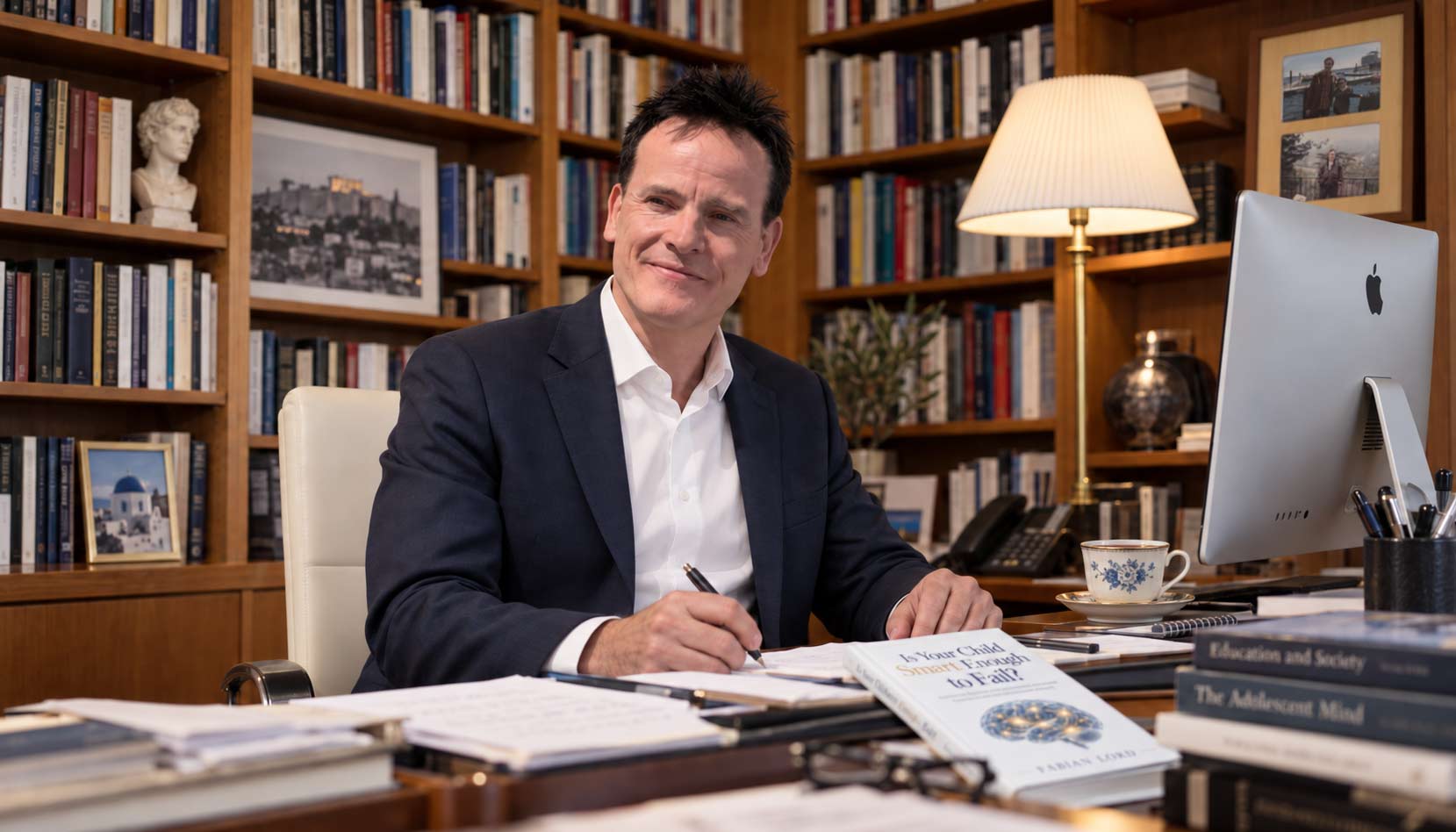
Fabian E.J. Lord
Director of LearningFabian Lord is Director of Learning at the Institute for Advanced Learning and Metacognition. A learning coach, educational consultant and author, he has spent many years coaching people of all ages how to study … not what to learn, but how the mind takes information in, retains it, and reproduces it when it matters most. Lord is recognised for his wide-ranging memory techniques and scholarship in the field of memory encoding, retention and recall in child development. His methods have also been proven at the highest competitive level, having trained individuals who went on to become world memory champions.
“I started by asking a simple question: How can we help people learn more effectively? Everything the Institute has become since traces back to that one question.”
Fabian LordHe co-founded the Institute in March 2018, initially as Young Active Minds, and led its development through to its evolution into the IALM in 2026, broadening the Institute's work from memory and study skills into the wider science of learning, metacognition, and cognitive development.
Lord previously served as chair of the Institute's Board of Trustees, a role he held from its founding until stepping down to take up the position of Director of Learning.
His coaching spans the full arc of a learning life. He has prepared primary school pupils for their first national assessments, coached candidates through competitive school admission processes, taught GCSE and A-level students the study techniques that carry them into higher education, coached students into Cambridge, Oxford and other prestigious universities, and designed and delivered national training programmes for a workforce of six and a half thousand adults. The subject changes at each stage. The underlying question does not: how does this particular person actually learn, and what would help them learn better, faster and with greater efficiency?
That question grew out of an earlier career analysing human behaviour and performance in high-stakes environments. Lord trained with UK Special Forces and served in the British military before moving into law enforcement, where he worked as a detective across two police forces and, within a specialist unit, contributed to some of the UK's highest-profile national security investigations. He was later called upon to advise the UK government on the regulation of the private security industry. That grounding in human performance under pressure carried through into civilian life. As a HR Manager and, subsequently, as a Chartered member of the Chartered Institute of Personnel and Development, he specialised in preparing candidates to perform at their best within highly selective recruitment and selection programmes across both the public and private sectors. That experience was later joined by responsibility for the assessment and attainment data of secondary school students. Working at that scale made patterns impossible to ignore. Conventional education tends to treat learners as a single homogeneous group, while the psychological and physiological factors that shape how an individual studies are left largely unexamined. Lord's work sits within that gap.
His approach to the development and coaching of study skills rests on three connected strands. The first is high-order encoding, using cognitive frameworks that move learners beyond rote memorisation towards deep, relational understanding and durable long-term retrieval. The second is biological and circadian alignment, using diagnostic analysis on sleep architecture, nutrition and physiological markers to schedule study when the brain is best placed to consolidate what it encounters. The third is individual profiling, building a picture of how a particular learner thinks so that the bottlenecks holding them back can be addressed directly rather than generically.
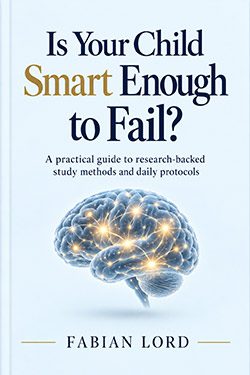
Lord's first book, published in 2011 and focused on social media intelligence, became a global bestseller. These strands come together in his second book, Is Your Child Smart Enough to Fail? a practical guide to the study methods and daily protocols that research supports, written for learners rather than for specialists. His techniques draw on his membership of the Chartered Institute of Educational Assessors and follow the guidance and practice set out by the British Psychological Society.
Alongside his work at the Institute, Lord founded and serves as Secretary of The Learning Lab, a British Mensa Special Interest Group established to enhance the science of learning. The group examines evidence-based memory and accelerated-learning techniques, the psychology of focus and motivation, Cognitive Load Theory, and the ways sleep hygiene, exercise, nutrition and stress shape cognitive performance.
As the Institute's Lead Education Assessor, Lord leads the assessment team for the National Schools Programme, which was recognised by the Prime Minister through a Points of Light Award. He brings to this work first-hand governance experience as a school governor. His work has spanned both the state and independent school sectors, giving him a broad and comparative understanding of how different educational settings support learning. He designs assessment strategies for a wide spectrum of students, from those from disadvantaged backgrounds to gifted learners whose potential he works extensively to develop, and has collaborated on workshops teaching advanced memory techniques to young people internationally. In his previous school-based work he interpreted CAT, literacy testing and JCQ specifications, set aspirational targets using national benchmarking data, and translated diagnostic results into reports that helped teachers close attainment gaps for students at risk of falling behind.
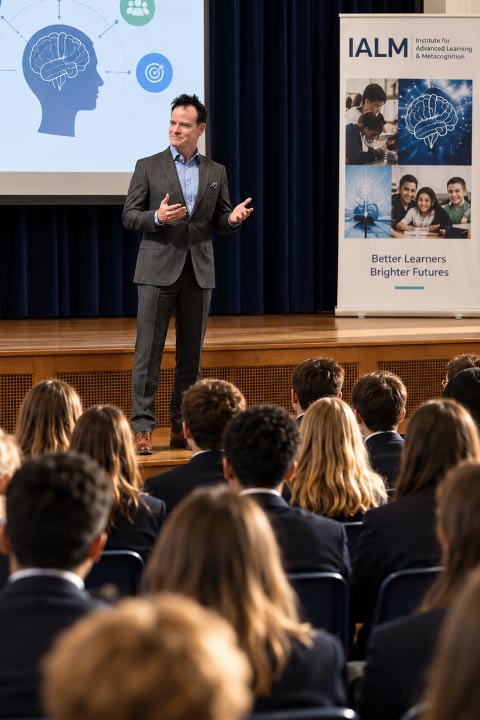
He has taught and spoken widely beyond the classroom, taking to stages around the world. He is a TED-Ed Educator, founded and organised the first TEDx event in Bolton, Greater Manchester around the theme of game changers and disruptive thinkers, and has served as an expert panel speaker on cyber safety in education at BETT Futures. Through iTechExplorers he has helped turn doctoral-scale research on adolescent sleep and technology use into an international citizen science project reaching schools and universities across several continents.
Lord holds an MBA with Distinction and is currently reading for an MSc in Psychology, accredited by the British Psychological Society. He holds a BA (Hons) in Human Resource Management and a postgraduate certificate in Quality Management. He is a Fellow of the Royal Society of Arts and European Ambassador for Division 15 of the International Association of Applied Psychologists (IAAP). He holds a Guinness World Record, awarded Freedom of the City of London in 1998 and granted a personal coat of arms by the late Queen in 2003 in recognition of services to the State.
Outside of his professional work, Lord's interests include flying, heraldry, creating puzzles, resistance and cardio training, and time spent with his family.